
How to prepare education for a world where artificial intelligence becomes a natural part of learning, work, and decision-making? And how to maintain space for human judgment, critical thinking, and responsibility? These questions resonated at the AI in Education Summit 2026 in Dubai. From October 8 to 10, 2026, this international expert event was attended by Assoc. Prof. PhDr. Jarmila Maximová, PhD., from the Department of Ethics and Aesthetics at FF UKF in Nitra. The extended form of participation, Delegate Summit Plus, included not only plenary lectures but also expert workshops and post-conference individual consultations.
One of the central ideas of the summit was presented in the opening lecture by Dr. Neil Hopkins titled If You Aren’t Shaping AI, It’s Shaping You (If you don’t shape AI, it will shape you). This idea also captured the broader context of the event, emphasizing the need for an active and thoughtful approach to digital technologies, which are increasingly entering education.
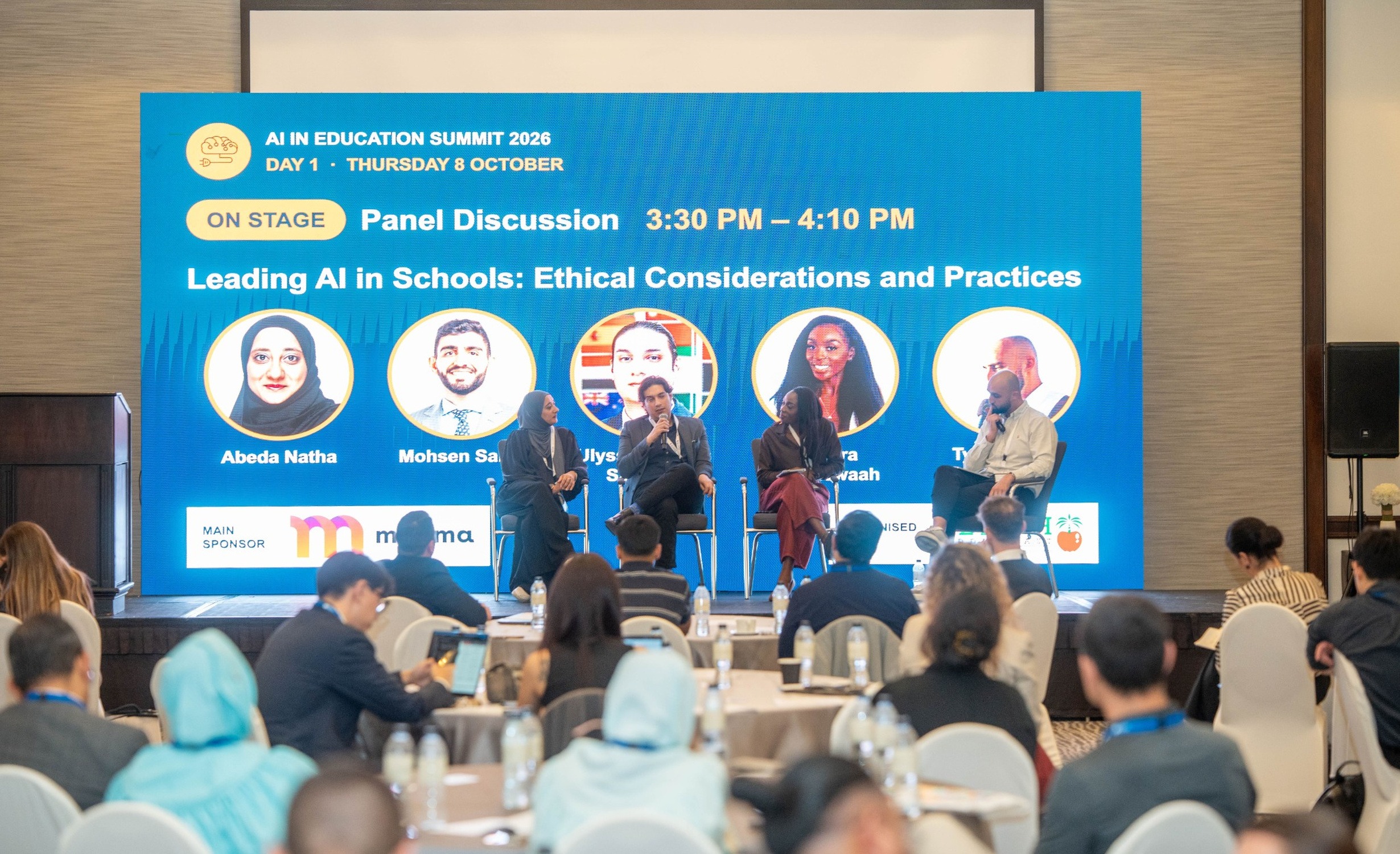
The summit program covered a wide range of current topics, including the development of AI literacy, the creation of institutional rules, preparing students for a changing job market, academic integrity, critical thinking, personalized education, and the use of AI in research. Special attention was given to how to prevent passive use of digital technologies while also supporting students’ independence in thinking and decision-making.
An important part of the program was also a panel discussion focused on the ethical aspects and responsible use of artificial intelligence in the educational environment. Practically oriented workshops focused on application development using AI Studio, possibilities for personalized education supported by artificial intelligence, and the use of AI in data analysis in educational research. The expert program naturally connected discussions about the broader direction of education with examples of good practice and specific experiences with the use of new technologies.
The third day was dedicated to post-conference individual consultations and networking, which created space for exchanging experiences and establishing contacts with experts in AI and education from various countries.
Participation in the summit provided several insights applicable in further professional and pedagogical activities, especially concerning the ethical and social aspects of using artificial intelligence in education. The event also demonstrated that the international discussion about AI is increasingly shifting from the question of what technologies can do to the question of how to use them meaningfully, critically, and responsibly.
Text and photo: Assoc. Prof. PhDr. Jarmila Maximová, PhD., FF – Department of Ethics and Aesthetics